If you want your first home to help pay for itself, house hacking can be a smart way to get there. In Chicago’s west and southwest areas, the opportunity is real, but so are the tradeoffs around price, rent, zoning, and legal setup. The good news is that with the right strategy, you can spot options that fit both your budget and your long-term goals. Let’s dive in.
Why house hacking works in Chicago
House hacking is simple in concept: you live in one part of the property and rent out another part to offset your housing costs. That can mean buying a 2-flat, 3-flat, or 4-flat and occupying one unit, or buying a home with a legal rental setup already in place.
In Chicago, the basic numbers show why so many buyers are interested. March 2026 market snapshots show a median sale price around $410,000 citywide, a median listing price around $355,000, and median rent near $2,300. When prices and rents are both meaningful, buyers naturally start looking for ways to combine homeownership with rental income.
West Side vs Southwest Side
If you are comparing Chicago’s West Side and Southwest Side, the biggest difference is usually entry cost versus rent potential. Both areas can work for house hacking, but they tend to fit different buyer profiles.
West Side pricing and rent
The West Side generally offers stronger rent support, but it also comes with a higher price tag. Current market snapshots show a median sale price of about $487,000, a median listing price of about $460,000, and median rent around $2,636.
That means your rent upside may be better, especially if you buy a well-located multi-unit property with an existing legal layout. At the same time, Realtor.com currently labels the West Side a seller’s market, so competition can be tighter and your margin for error can be smaller.
Southwest Side pricing and rent
The Southwest Side is often the lower-cost entry point. Current snapshots show a median sale price around $280,000, a median listing price of about $284,900, and median rent near $1,600.
That lower purchase price can make it easier to get into the market, especially if you are financing the home as an owner-occupant. The tradeoff is that rent ceilings are lower, so you need to be realistic about how much income the property can actually produce.
What the comparison means for you
In practical terms, the West Side may appeal more if you can handle a higher acquisition cost and want stronger rental support. The Southwest Side may be a better fit if affordability is your top priority and you are focused on lowering your monthly payment with some rental help.
A rough first-pass screen using local listing and rent medians suggests similar gross annual rent-to-list ratios in both areas, around the high 6 percent range. That is only a quick filter, not a full investment analysis, because it does not include taxes, insurance, repairs, vacancy, or financing costs.
Best property types for house hacking
Not every property type works equally well. In Chicago’s west and southwest corridors, the legal setup often matters just as much as the price.
Two- to four-flats
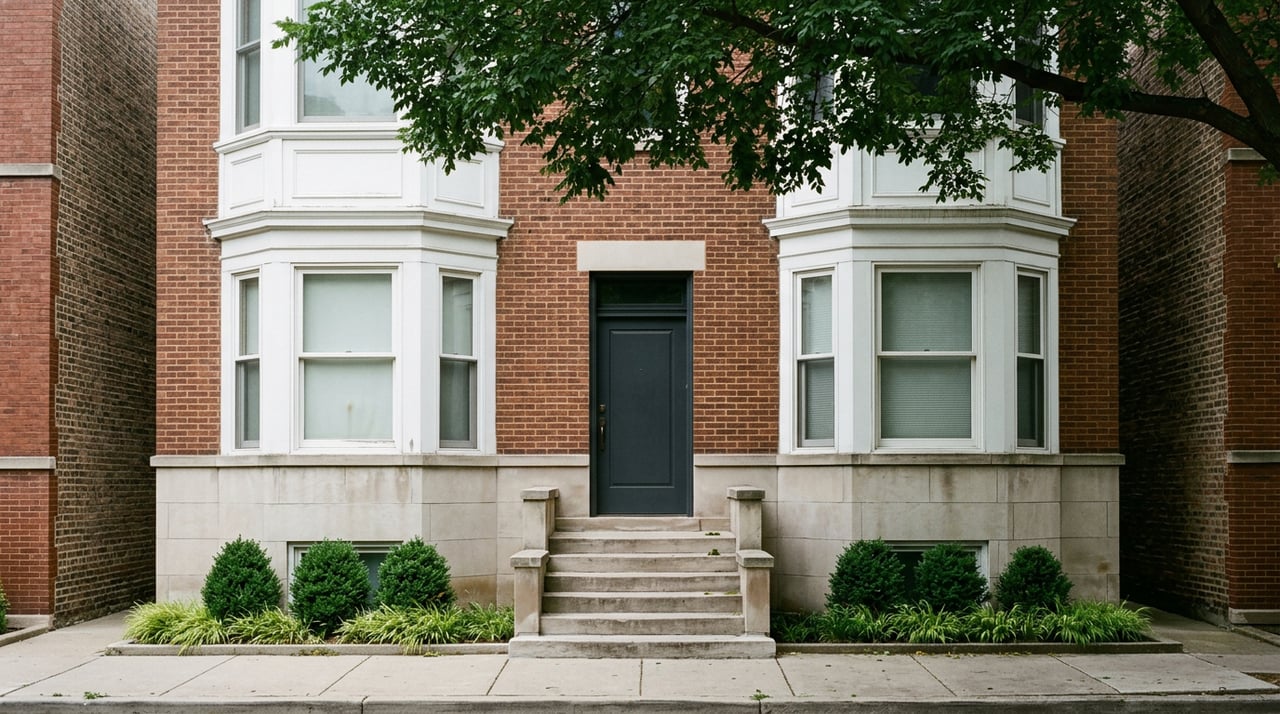
For many buyers, a 2-flat, 3-flat, or 4-flat is the cleanest house-hack structure. The rental units already exist, the income stream is easier to understand, and the legal risk is usually lower than trying to create a rental space from scratch.
The search inventory is deep enough to make this strategy realistic. Current West Side listings show 209 multi-family homes for sale at a median listing price of $475,000, while Southwest Side listings range widely from about $120,000 to well above $800,000.
That variety gives you options, but it also means you need to compare condition carefully. A cheaper building may still become the more expensive choice if it needs major repairs, unit reconfiguration, or systems updates.
Basement apartment setups
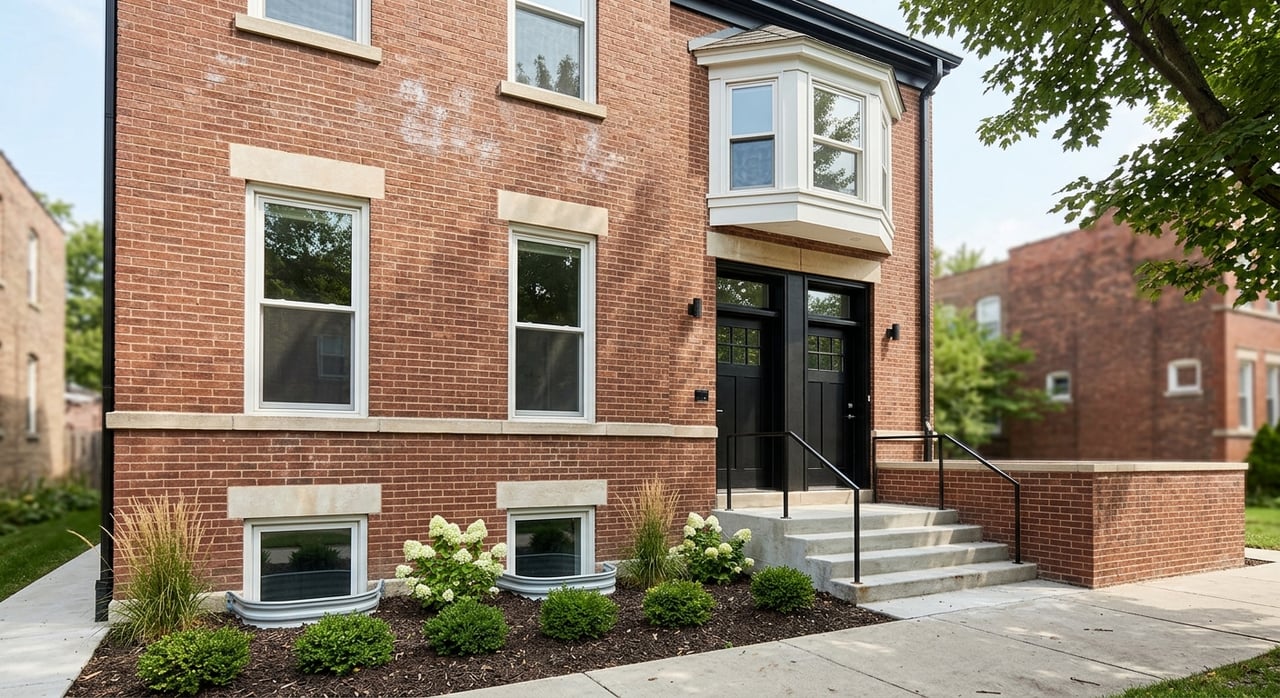
A finished basement is not automatically a legal rental in Chicago. Under the Chicago Building Code, habitable spaces generally need a 7-foot clear ceiling height, windows facing outdoors or a court with glazed area equal to at least 6 percent of the floor area, and protection from leakage and dampness.
For you as a buyer, that means a basement conversion needs more than a quick visual check. You should look closely at moisture, light, ventilation, legal egress, and whether the layout can realistically meet code without a major gut rehab.
This is where patience pays off. A basement setup may look like a low-cost way to add income, but if it is not legally habitable, it can change the whole deal.
ADUs and coach houses
ADUs can be another path, especially if you are thinking long term. In Chicago, ADUs include coach houses and conversion units, and the city zoning map includes an ADU Area layer you can use to verify parcel eligibility.
There are important rules to understand up front. If two or more ADUs are added after May 1, 2021 to a residential building other than CHA housing, 50 percent of the new ADUs must be maintained as affordable housing units for 30 years.
Coach houses also have specific limits and allowances. They may not exceed 22 feet in height, may be built without accessory parking, and are not subject to floor-area-ratio limits.
For some buyers, ADUs make sense for long-term rental income or multigenerational living. But compared with a standard multi-unit property, they are usually more rules-driven, so you want to understand the zoning and affordability requirements before you build your plan around them.
Financing options to explore
Financing can make or break a house-hack strategy, especially if you are trying to buy your first property with a manageable down payment. The good news is that owner-occupant loan programs can open doors on 1- to 4-unit properties.
FHA loans can go as low as 3.5 percent down for 1- to 4-unit properties if you will live there as your primary residence. Fannie Mae HomeReady and Freddie Mac Home Possible also advertise down payments as low as 3 percent for eligible borrowers, and Freddie Mac notes that its 2- to 4-unit product is specifically for owner-occupied primary residences.
If your down payment is under 20 percent, Freddie Mac also notes that you generally pay PMI. That does not automatically make the deal a bad one, but it is part of your monthly cost and needs to be included in your budget.
When renovation financing matters
Older Chicago housing stock can offer strong value, but many properties need work. If your strategy involves reconfiguring units, improving systems, or converting a one-family home into a 2- to 4-family property, renovation financing may become part of the conversation.
HUD says the FHA 203(k) program can roll the purchase and rehab into one mortgage, and it can be used to convert a one-family home into a two- to four-family unit. That makes it especially relevant in areas where layout changes or major updates are part of the opportunity.
How to screen a deal before you fall in love
One of the biggest mistakes buyers make is getting excited about the idea of house hacking before checking whether the numbers and legal setup actually work. In Chicago, public data can help you do a smarter first review.
Start with zoning and property records
A good first step is to confirm the property’s zoning and, if relevant, ADU eligibility using the Chicago zoning map. Then review the Cook County Assessor’s property details tool for estimated market value, assessed value, and property characteristics.
The Assessor says fair market value is updated once every three years. That makes the data useful, but it should still be treated as one part of your review rather than the only pricing benchmark.
Compare price to local rent reality
Neighborhood medians can help you reality-check your rent assumptions. Realtor.com currently puts the West Side around a $460,000 median listing price with median rent near $2,636, while the Southwest Side sits around a $284,900 median listing price with median rent near $1,600.
This matters because every property type has a different rent ceiling. A renovated 2-flat, a basement conversion, and an ADU-friendly home may all look appealing on paper, but they do not offer the same income potential.
Use a simple workflow
If you want a practical screening process, keep it simple:
- Confirm zoning and ADU eligibility
- Pull tax and assessed-value data
- Compare the asking price to sold comps
- Estimate realistic rent using local rent medians
- Add reserves, repairs, and rehab costs
- Test the monthly payment with your financing terms
In these parts of Chicago, the best opportunity is usually not the cheapest sticker price. It is the property where the legal structure and the rent math both make sense.
Should you also look outside the city?
For some buyers, the answer is yes. If you like the idea of house hacking but want more comparison points, nearby west-corridor suburbs can help you understand the broader market.
Berwyn shows a median sale price around $351,000, multi-family median listing price around $490,000, and average rent near $1,630. Oak Park shows a median sale price around $340,000 and average rent around $2,045.
These are not direct substitutes for Chicago neighborhoods, but they are useful benchmarks. If your budget, commute, or property preference gives you flexibility, widening your search can reveal options that fit your goals better.
The bottom line on house hacking here
House hacking in Chicago’s west and southwest areas can absolutely work, but the best strategy depends on what matters most to you. If you want stronger rent support and can compete at a higher price point, the West Side may offer more upside. If you need a lower-cost entry point and are comfortable with lower rent ceilings, the Southwest Side may be the better fit.
In most cases, 2- to 4-flats are the most straightforward path. Basement apartments can work, but they are more code-sensitive, and ADUs can be attractive but are more rules-driven.
If you want help sorting through financing, renovation potential, and the real numbers behind a property, working with someone who understands both homes and house-hack strategy can save you time and stress. If you are exploring your options in Chicago or nearby west and southwest suburbs, Tatiana Hernandez can help you build a smarter search plan.
FAQs
What is house hacking in Chicago?
- House hacking in Chicago usually means buying a property, living in one unit or portion of it, and renting out the other unit or space to help offset your housing costs.
Which Chicago area is better for house hacking, West Side or Southwest Side?
- The West Side generally offers higher rents but higher purchase prices, while the Southwest Side usually offers lower entry costs but lower rent ceilings.
Are basement apartments legal rentals in Chicago?
- Basement apartments can be legal in Chicago only if they meet code requirements for items like ceiling height, windows, moisture protection, light, ventilation, and habitable space standards.
Are ADUs allowed for house hacking in Chicago?
- ADUs are allowed in eligible Chicago areas, but you need to verify parcel eligibility and understand rules tied to zoning, coach house standards, and affordability requirements.
What loans can help with house hacking in Chicago?
- Owner-occupant buyers may explore FHA loans, Fannie Mae HomeReady, Freddie Mac Home Possible, and in renovation cases, FHA 203(k), depending on eligibility and property type.
What property type is usually easiest for house hacking in Chicago?
- For many buyers, a 2- to 4-flat is the simplest option because the rental units already exist and the income potential is usually easier to evaluate than a basement or ADU conversion.