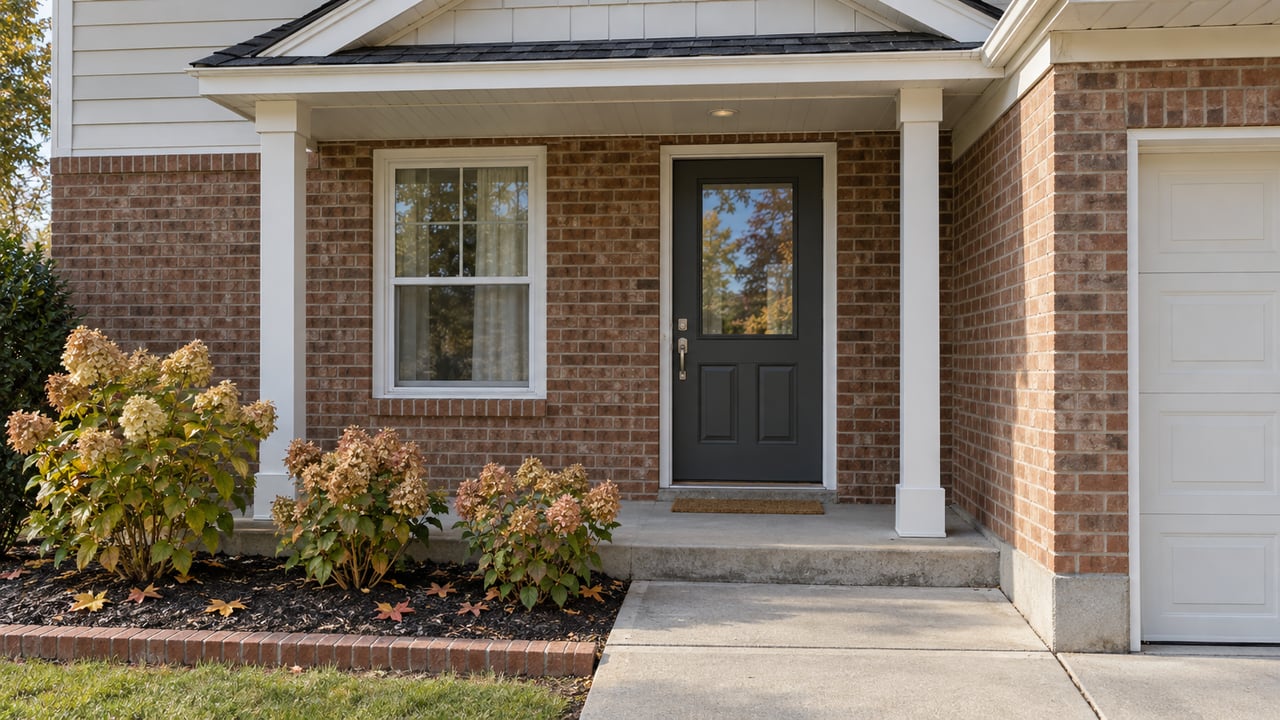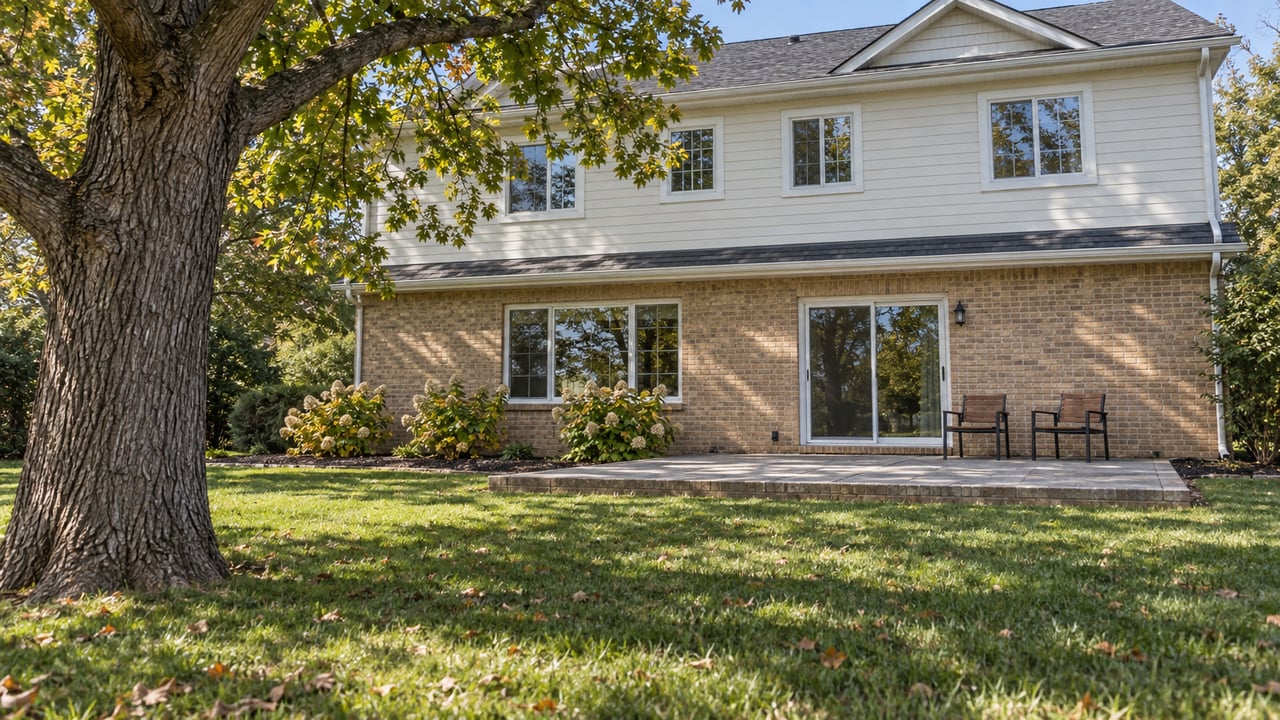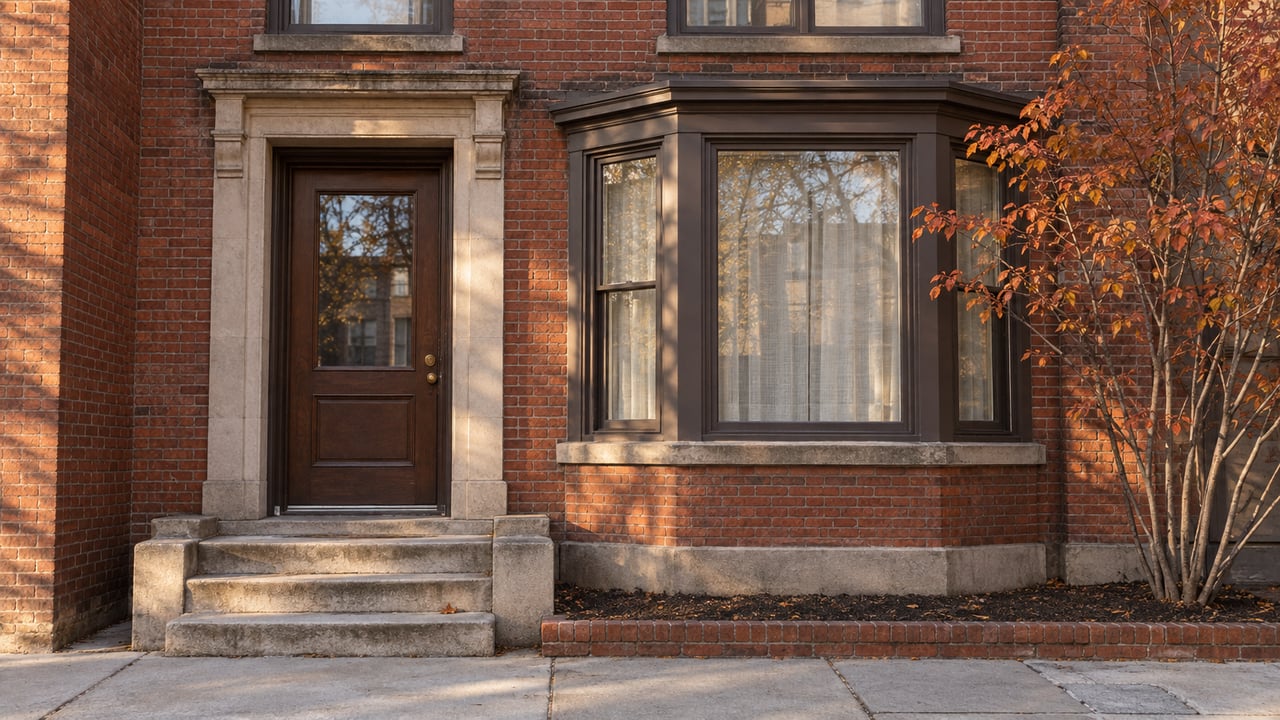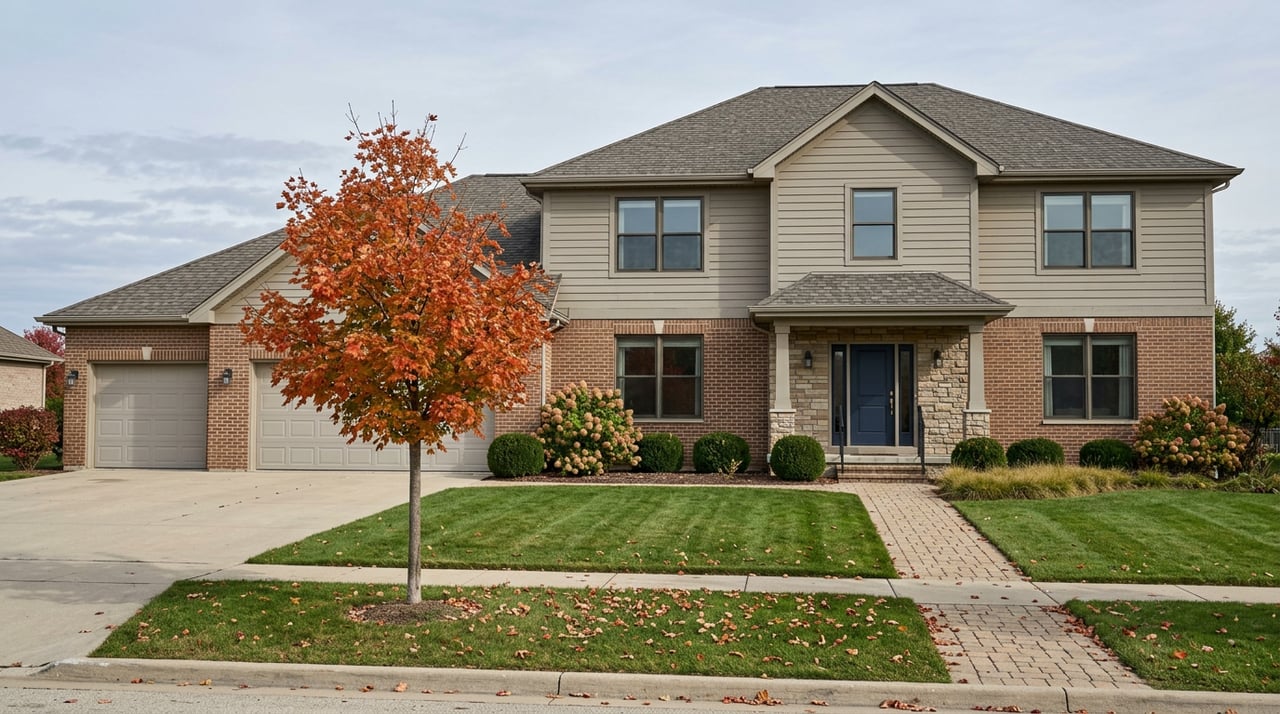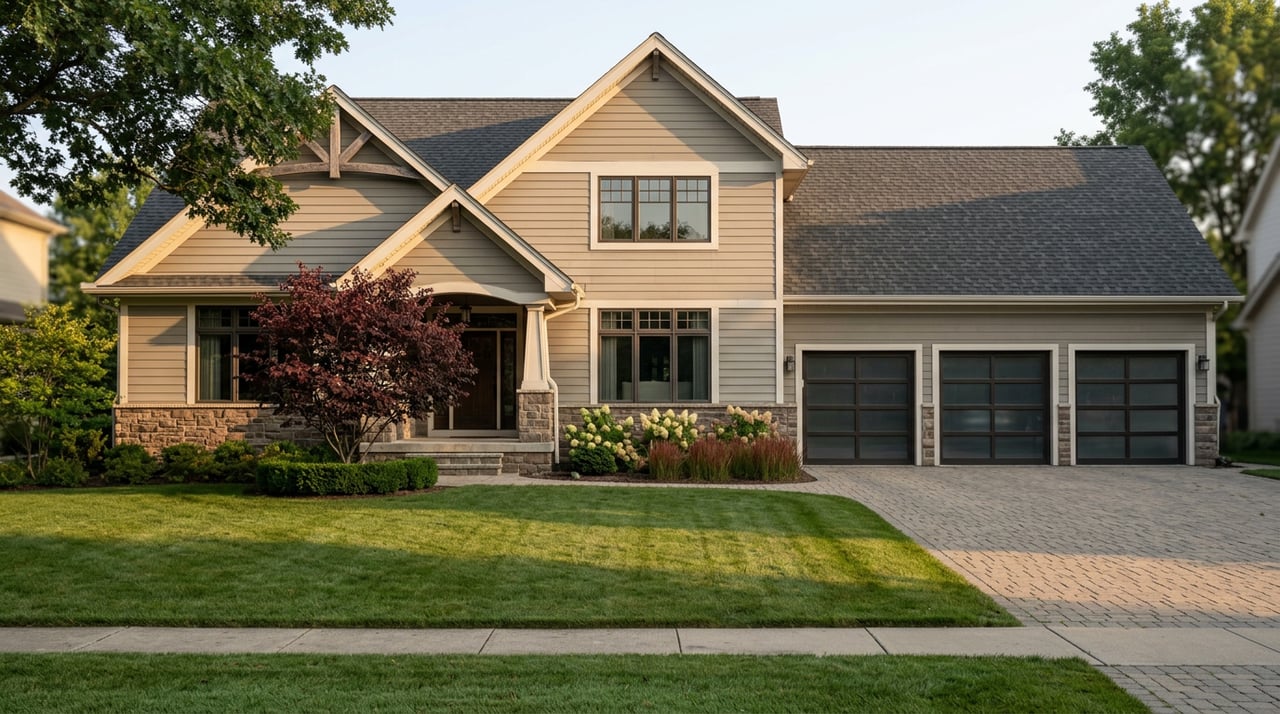
Picture two houses on opposite sides of County Line Road. Same builder, same year, same four bedrooms, same list price. One is going to cost its next owner roughly a thousand dollars a year more than the other, before a single light bulb gets replaced. Nothing about the houses explains it. The county line does.
Burr Ridge is one of the very few Chicagoland villages that lives in two counties at once, and the tax mechanics on either side of that boundary do not match. For most of the last decade that was a footnote. In 2026 it is the number one thing a buyer should understand before writing an offer, because the Cook County side is in the middle of a reassessment cycle that will set the tax base for the next three years.
The line runs through the village
Burr Ridge sits at the intersection of I-55 and I-294, and the village boundary crosses the DuPage/Cook county line right through the middle of town. The Village of Burr Ridge itself pulls parcel data from both counties for its GIS system, because both counties own pieces of the map.
The DuPage side of Burr Ridge falls inside Downers Grove Township. The Cook side falls inside Lyons Township, whose approximate western border is County Line Road itself. Lyons Township covers a big stretch of the near-southwest suburbs, from La Grange to Indian Head Park to the Cook portions of Western Springs, Hinsdale, and Burr Ridge.
That township assignment is the fork in the road for everything that follows: which assessor values the home, how often, on what schedule, and against what set of taxing bodies.
What the split actually costs
The clearest way to see the difference is to line up the two sides against each other.
| DuPage side of Burr Ridge | Cook side of Burr Ridge | |
|---|---|---|
| Township | Downers Grove Township | Lyons Township |
| Reporting median effective rate | ~1.74% | ~1.90–1.98% |
| Reassessment cycle | Annual assessments, quadrennial general reassessment | Triennial (every three years) |
| Next full reassessment | Ongoing annual | 2026 (south/southwest triad) |
| Appeal deadline pattern | Set date, historically around June 1 | Rolling ~30-day window per township |
| Appeal venues | Township assessor, then DuPage Board of Review | Cook County Assessor, then Cook County Board of Review |
On a $685,000 Burr Ridge home, the gap between a 1.74% effective rate and a 1.95% effective rate is roughly $1,440 a year. Over a seven-year hold, that is more than $10,000 that never showed up in the MLS description. The DuPage Policy Journal pegged the 2025 Burr Ridge median tax bill at $11,641, or about 1.8% of median value across both sides pooled together.
Those Ownwell figures are averages, not guarantees. Individual bills swing on subdivision, school district, special service areas, and homestead exemptions. But the direction of the split is consistent, and it is the opposite of what most buyers assume when they hear "DuPage County has higher property taxes than Cook." Countywide, that is true. In this specific village, on this specific line, the Cook side generally bills higher.
Why 2026 is the year to pay attention
Cook County reassesses one third of its townships every year. The city of Chicago's townships were reassessed in 2025. This year, in 2026, the Cook County Assessor's Office is working through the south and southwest suburban triad. Lyons Township is inside that triad. Every Cook-side Burr Ridge parcel is getting a fresh estimated fair market value this year, and that number becomes the base assessment for the 2026, 2027, and 2028 tax bills.
Reassessment years are historically the largest single driver of tax increases in Cook County. When O'Connor's team wrote up the 2026 cycle, they described the 2023 south-suburban reassessment as one of the most consequential in county history, with some neighborhoods seeing double-digit percentage jumps to their base value. Whatever the Assessor publishes for a Cook-side Burr Ridge home this spring or summer is what shows up, compounded by local levies, on the second-installment bill next August.
The DuPage side is not on the same clock. DuPage County mails assessment notices in the spring every year, and the appeal window historically closes around June 1. Increases happen, but they arrive in smaller annual increments rather than a single triennial step-up. A buyer closing on a Downers Grove Township parcel in late 2026 is walking into a slower-moving system than a buyer closing on a Lyons Township parcel two blocks east.
The appeal calendar looks nothing alike
If you are buying on either side of the line, learning your own appeal calendar is part of the diligence. The two systems do not resemble each other in useful ways.
- DuPage side. Assessment notices arrive by mid-May in most years. Appeals go first to the local township assessor, then to the DuPage County Board of Review. There is a single published county deadline, historically around June 1, and it applies to every parcel in the county at once.
- Cook side. There is no single deadline. The Cook County Assessor opens each township's window on a rolling schedule, with roughly 30 days to file once your notice mails. In a reassessment year, you get two consecutive shots: first with the Assessor, then with the independent Cook County Board of Review when it opens the township later in the year. In off-years, only the Board of Review is available.
- What that means at closing. If you buy a Cook-side Burr Ridge home in March 2026, your reassessment notice may not have arrived yet. If you buy the same home in October 2026, the notice may already be baked in and your window with the Assessor may have closed. The date on your contract can decide whether you inherit a fresh appeal opportunity or a locked-in number for the next three years.
None of this is a reason to avoid Burr Ridge or to prefer one side of the village over the other. It is a reason to ask which side, and to price the answer into the offer.
What to do before you write an offer
The county line question does not need to slow anyone down. It just needs to be on the list.
- Confirm the county on the parcel, not the street. County Line Road is the rough boundary, but there are pockets where the line jogs. The Cook County parcel viewer and the DuPage County parcel viewer both pull up county assignment from a PIN in seconds.
- Pull the last three years of tax bills. Seller-provided numbers are a starting point, not a finish line. Look for a Cook-side home whose last bill predates the 2026 reassessment. That bill is about to be a historical artifact.
- Check the reassessment status. If the home is on the Cook side, ask whether the Lyons Township reassessment notice has been mailed for that parcel yet. If it has, the new base value is public. If it has not, you are pricing a home whose next tax bill is a moving target.
- Ask about the homestead exemption transfer. Illinois homestead and senior exemptions do not always transfer cleanly at sale, and the first bill after closing can look nothing like the seller's last bill for that reason alone. This is a title company conversation, not a marketing brochure conversation.
- Model both scenarios. For any Cook-side home under consideration, run the monthly cost at the current assessment and at a plausible reassessed value. If the deal still works at the higher number, the offer is defensible. If it does not, the offer needs to reflect that risk.
FAQ
Is the DuPage side of Burr Ridge always cheaper on taxes? On average, yes, based on current effective-rate data across the village. But subdivisions and special service areas can flip individual comparisons. A specific address is the only thing worth trusting.
Does the county the home sits in change which schools the kids attend? Not directly. School district boundaries do not follow county lines in Burr Ridge. Pleasantdale School District 107 and Lyons Township High School District 204 serve parts of the village on both sides of the county line, and other districts serve other pockets. Verify the district on the parcel, not the county.
If I buy a Cook-side home in 2026, can I appeal the reassessment even though I just bought it? The right to appeal runs with the property, not the owner. If the appeal window is still open when you close, you can file. If the Assessor's window has already closed for your township, the Board of Review window still opens later in the year. A tax attorney or a licensed tax representative can confirm the exact dates for your township once the notice has been mailed.
Does any of this affect how I should price my Burr Ridge home if I am selling? If your home is on the Cook side and your tax bill still reflects a pre-reassessment base, that is a story worth telling buyers, because a rational buyer is pricing in the reassessment risk. If your home is on the DuPage side, a stable annual assessment history is itself a selling point. Both sides have a case. Neither case tells itself.
Buying in Burr Ridge is not more complicated than buying anywhere else in the western suburbs. It is just that two of the questions have to be asked in a specific order, and in 2026 the timing of those questions matters more than usual. If you are weighing an offer on either side of the line and want a second read on what the tax picture actually looks like on that parcel, Tatiana Hernandez can walk through it with you before the contract goes out. Let's Connect.