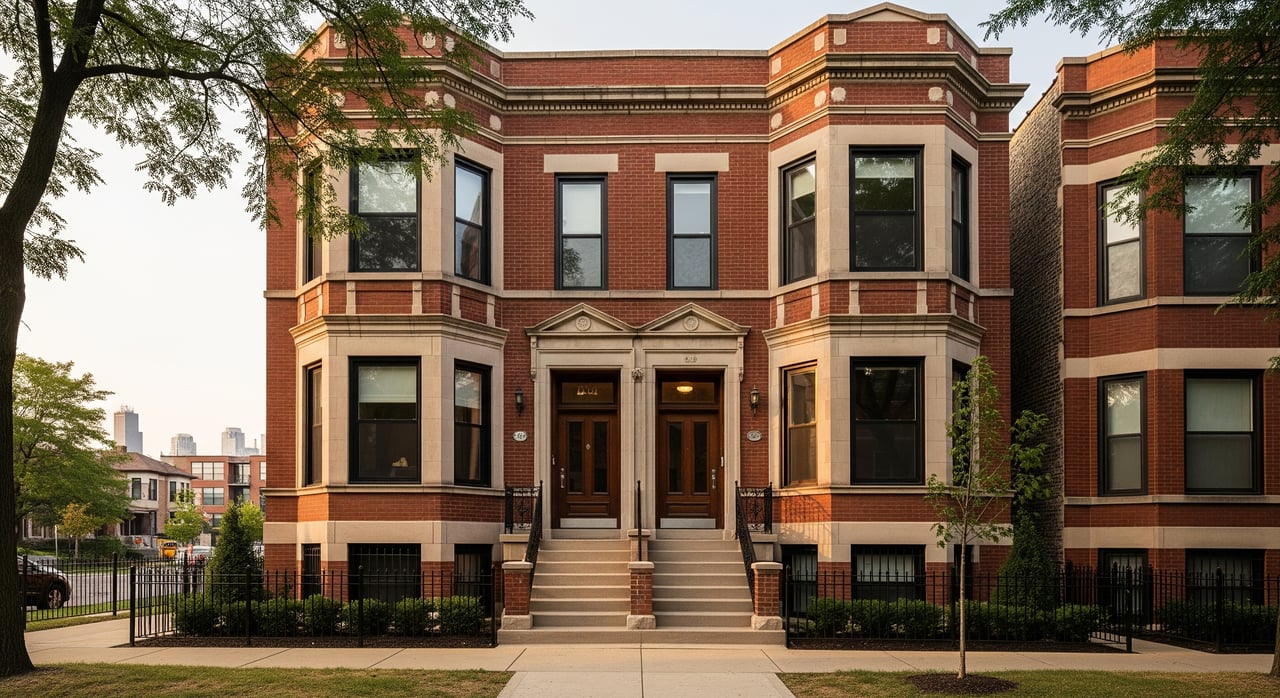
Thinking about living in one unit while your tenant helps cover the mortgage? In Chicago, classic two- and three-flats make that goal realistic for first-time buyers and investor-minded house hackers. You might be weighing financing options, wondering what the city requires, and trying to figure out the numbers. This guide gives you clear steps to analyze a 2–4 unit, understand local rules, and get rent-ready with confidence. Let’s dive in.
What a Chicago 2‑flat really is
A 2‑flat is a small multifamily building with two separate dwelling units, often one per floor. Three- and four-flats follow the same pattern and are common on single Chicago lots. Many buyers live in one unit and rent the others to offset costs.
Before you buy, confirm that the current use matches the zoning and that past work was permitted. Chicago’s zoning and permitting rules shape what you can do with parking, layouts, and renovations. Review official guidance and landlord requirements on the City of Chicago website, and always verify details specific to a property.
Rules you must know in Chicago
RLTO and landlord obligations
If you plan to rent a unit, you must comply with the Chicago Residential Landlord and Tenant Ordinance (RLTO). It governs key items like required disclosures, how to handle security deposits, entry notices, and repair responsibilities. You should also confirm current rental registration and inspection requirements. Start with the City of Chicago for official landlord guidance and updates.
Permits and unpermitted work
Chicago requires permits for structural, electrical, plumbing, HVAC, and many exterior projects. Unpermitted work can delay financing or occupancy. Use licensed contractors and factor the permit timeline into your budget. The Department of Buildings and permit resources are available at City of Chicago.
Lead-based paint and older buildings
Many Chicago two-flats were built before 1978. Federal rules require lead paint disclosure and safe practices during renovation. Review lead-safe work practices through HUD and the EPA’s Renovation, Repair and Painting program on EPA.
Property taxes in Cook County
Property taxes are assessed and billed by Cook County. Do not rely only on the seller’s number. Check the current assessed value and exemptions with the Cook County Assessor and view the latest tax bills with the Cook County Treasurer. If taxes reset after a sale, your payment could change.
Financing your 2–4 unit purchase
Owner-occupant financing usually offers lower down payments and better rates than investor-only loans. Talk to lenders early about how they underwrite rental income and reserves for small multifamily.
FHA for house hackers
FHA’s 203(b) program allows you to buy 1–4 unit properties if you will live in one unit. Minimum down payment is typically 3.5 percent with qualifying credit, and mortgage insurance applies. If the building needs work, the FHA 203(k) program can finance approved renovations into the loan. Get the latest details from HUD.
Best for: buyers who want a low down payment and plan to occupy one unit. Note that FHA appraisals and property condition standards can be strict, especially if there is deferred maintenance or unpermitted work.
VA loans for eligible buyers
Eligible veterans can use VA home loans for 1–4 unit properties if they occupy one unit. VA loans often require no down payment and offer favorable terms. Review eligibility and occupancy rules at VA.
Conventional loans (Fannie Mae and Freddie Mac)
Conventional mortgages can also work for owner-occupied 2–4 unit properties. Down payment requirements vary by lender and borrower profile. Some lenders allow lower down payments for owner-occupants and consider a portion of projected rental income when calculating qualification. Review general program guidance at Fannie Mae and Freddie Mac, then confirm exact terms with your lender.
Portfolio and renovation financing
Local community banks and portfolio lenders may offer flexible underwriting for small multifamily and rehab plans. Short-term bridge or hard money loans are sometimes used for heavy rehabs, then refinanced into a longer-term loan. These products carry higher rates and fees, so use them strategically.
How lenders treat rental income
Most lenders will consider leases or market rent estimates and apply a conservative vacancy or expense factor to projected income. The exact percentage and method vary. Ask each lender how they calculate rent credit for owner-occupied 2–4 units and what reserves they require so you can plan accordingly.
Down payment help
Check current down payment assistance and first-time buyer programs with the Illinois Housing Development Authority (IHDA). Program funds and rules change, so verify eligibility and availability before you rely on them.
Inspection, rent‑readiness, and management basics
Pre‑purchase inspection checklist
Hire a licensed inspector with multi-unit experience. Ask them to evaluate:
- Structure, roof, foundation, and moisture
- Electrical, plumbing, HVAC, and water heaters
- Sewer line condition and main stack
- Egress and fire safety for each unit
- Signs of unpermitted work
- Potential lead or asbestos concerns in older buildings
Major systems can be immediate big-ticket items, so build those findings into your offer and reserves.
Permits, contractors, and timeline
If you plan to renovate, assume that structural, electrical, plumbing, and HVAC work will require permits. Choose licensed contractors who know the Chicago process and can provide references for multi-unit projects. For pre-1978 buildings, ensure contractors follow EPA RRP lead rules.
What “rent‑ready” should cover
Before you market a unit, confirm:
- Secure locks, operable windows, safe outlets, working plumbing
- Reliable heat and hot water, functioning smoke and CO alarms
- Clean, pest-free interiors with finished paint and flooring
- Appliance status if provided
- Utility setup and meter separation vs. shared utilities
- Rental registration and any inspections are current
- Proper landlord insurance for a 2–4 unit building
Tenant management and compliance
Use written leases that comply with Chicago and Illinois law. Follow RLTO rules for disclosures and security deposits. Set clear maintenance response standards and decide whether to self-manage or hire a property manager. If you screen applicants, do so lawfully and consistently, and verify current local rules for background checks.
Run the numbers like an investor
Step A: Build gross potential income (GPI)
Add up market rents for all units as if fully occupied. For a vacant or down unit, use a realistic stabilized rent after any planned rehab.
Step B: Estimate effective gross income (EGI)
Apply a vacancy and credit loss factor to your GPI to reflect real-world turnover. Strong markets might assume 5 to 10 percent, but some underwriters use a larger cushion. Be conservative.
Step C: Calculate net operating income (NOI)
NOI equals EGI minus operating expenses. Do not include mortgage payments or income taxes. Common expenses include property taxes, insurance, owner-paid utilities, repairs and maintenance, management, landscaping or snow, pest control, and professional fees.
Step D: Understand cap rate
Cap rate equals NOI divided by purchase price. Use it to compare properties on an apples-to-apples basis before financing. Higher cap rates often signal higher perceived risk or value-add work. For small multifamily, cap rates vary by neighborhood and property condition. Pair your pro forma with recent local sales.
Step E: Check cash flow and debt service
Cash flow before tax equals NOI minus annual debt service. Some lenders look at a debt service coverage ratio (NOI divided by annual debt service) on investor loans. For house hacking, also consider your reduced living costs since you occupy one unit.
Step F: Set strong reserves
Plan for two buckets: operating reserves and capital replacements. Many lenders and advisors suggest at least a few months of mortgage payments in reserves for owner-occupied loans, and more if you can. For long-life items like roofs, boilers, and windows, budget a yearly amount per unit or a percentage of rent and maintain a 5 to 10 year capital plan.
Simple framework for your pro forma
- Purchase price: P
- Gross potential income: sum of all unit rents
- Vacancy allowance: apply a conservative percentage
- Effective gross income: GPI minus vacancy
- Operating expenses: taxes, insurance, utilities, maintenance, management, and misc
- NOI: EGI minus operating expenses
- Cap rate: NOI divided by purchase price
- Annual debt service: monthly mortgage times 12
- Cash flow: NOI minus debt service
Practical purchase checklist
- Shortlist neighborhoods and pull recent 2–4 unit comps.
- Draft a conservative pro forma: GPI to NOI and cap rate.
- Order inspections and request any city records on permits or violations.
- Speak with lenders about FHA, conventional, VA, and rehab options. Confirm how they treat rental income and reserves.
- If you plan upgrades, get contractor bids and factor permit timing and seasonality.
- Verify assessed value and tax bills with the Cook County Assessor and the Cook County Treasurer.
- Prepare compliant lease templates and understand RLTO obligations.
- Fund your operating and capital reserves before listing a unit for rent.
Neighborhood selection tips
- Focus on areas with steady rental demand, transit access, and everyday conveniences.
- Compare similar building styles and conditions. A renovated two-flat with modern systems will support different rents than an older, unrenovated property.
- Talk with a local agent who understands 2–4 unit dynamics and can help you value condition, rents, and potential.
Quick Spanish glossary for your search
- 2‑flat / 3‑flat: edificio de dos unidades / edificio de tres unidades
- Owner‑occupant: propietario que ocupa la vivienda
- Down payment: pago inicial
- Cap rate: tasa de capitalización
- Net Operating Income (NOI): Ingreso Neto de Operación (NOI)
- Rent‑ready: listo para alquilar
- Lease: contrato de arrendamiento
- Security deposit: depósito de seguridad
- Repairs and maintenance: reparaciones y mantenimiento
- Lead paint: pintura con plomo
Helpful resources to verify details
- City rules, landlord requirements, and permits: City of Chicago
- FHA and 203(k) programs, plus lead guidance: HUD
- VA home loan eligibility and terms: VA
- Conventional program guidance: Fannie Mae and Freddie Mac
- State down payment assistance: IHDA
- Property assessment and tax bills: Cook County Assessor and Cook County Treasurer
- Lead-safe work practices: EPA
Ready to run numbers on a real listing and map out financing, rent-readiness, and a step-by-step plan? Reach out to Tatiana Hernandez for a bilingual, investor-savvy consult tailored to your Chicago or suburban house hack.
FAQs
What is a Chicago 2‑flat and how is it used?
- A 2‑flat is a two-unit residential building, often one unit per floor, commonly used by owner-occupants who live in one unit and rent the other.
Which loans allow me to buy a 2–4 unit if I live in one?
- FHA, VA (for eligible veterans), and many conventional loans allow owner-occupants to purchase 2–4 unit properties, each with different down payment and underwriting rules.
How does Chicago’s RLTO affect my lease and deposits?
- The RLTO sets rules for disclosures, security deposit handling, entry notices, repairs, and more, so your lease and processes must comply with the ordinance.
What inspections should I order before buying a two‑flat?
- Get a full building inspection covering roof, structure, mechanicals, plumbing, electrical, egress and safety, plus checks for unpermitted work and potential lead in pre-1978 buildings.
How do I estimate cap rate and cash flow on a small multifamily?
- Build GPI from market rents, subtract a vacancy factor for EGI, deduct operating expenses for NOI, then divide NOI by price for cap rate and subtract debt service to see cash flow.
Where can I verify Chicago permits, taxes, and assistance?
- Use City of Chicago resources for permits and landlord rules, Cook County Assessor and Treasurer for taxes, and IHDA for current down payment assistance programs.